The Alien Hypothesis Part 1: Were Humanity’s “Gods” More Than Myth?
Across the ancient world, civilizations separated by oceans and thousands of years shared a remarkably similar idea:
The gods came from the sky. From the Sumerians of Mesopotamia to the pyramids of Egypt,
from the Vedic traditions of India to the myths of Mesoamerica, humanity repeatedly described powerful beings descending from the heavens—bringing knowledge, order, technology, and transformation.
To modern eyes, these stories are often dismissed as mythology. But what if they reveal something deeper? Not necessarily literal visitors in spacecraft—but humanity’s enduring intuition that intelligence may exist beyond us, and that our origins may be more mysterious than we imagine.
The Mystery Beneath the Myths
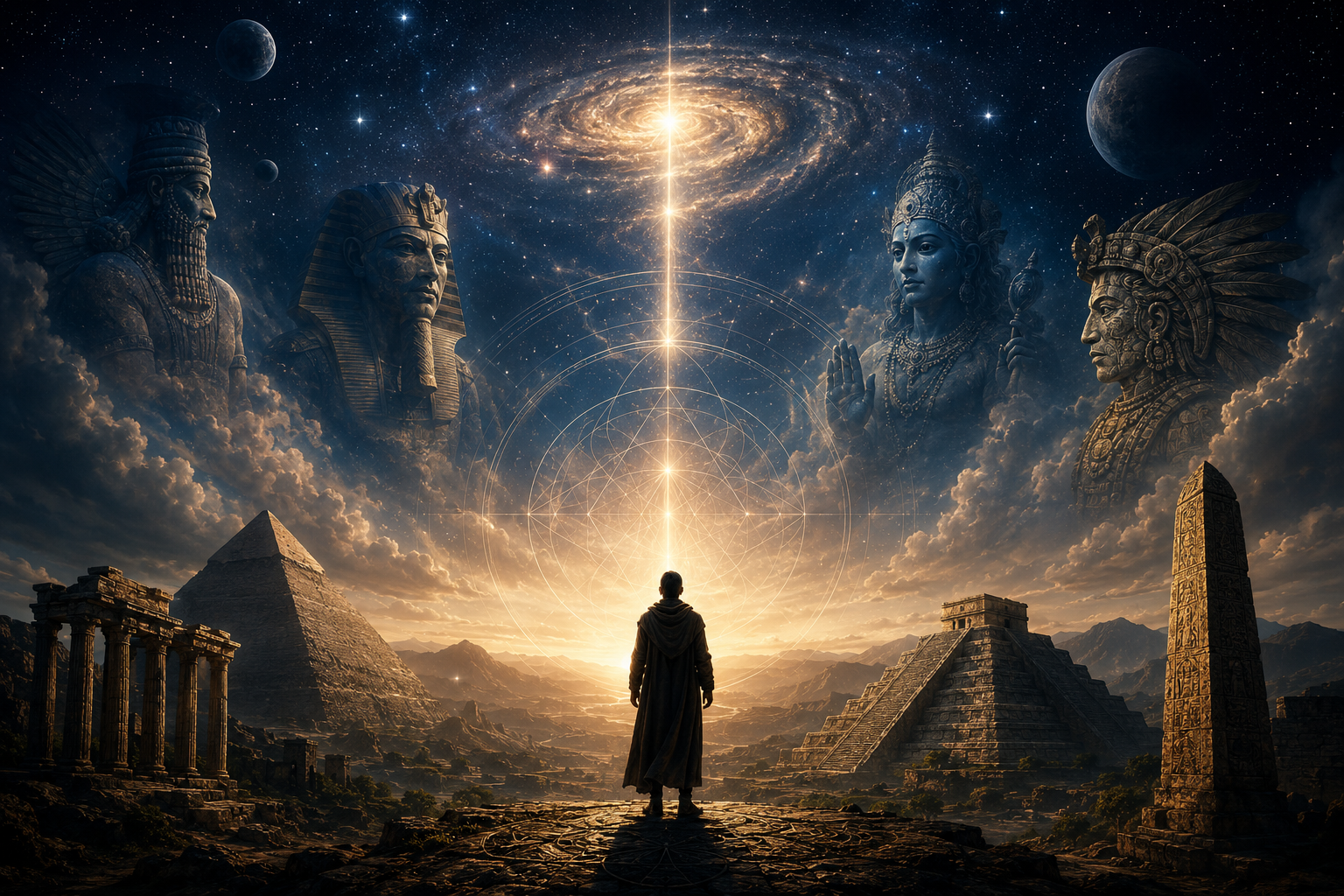
Ancient cultures did not see themselves as isolated. Again and again, their stories pointed upward. The Sumerians spoke of the Anunnaki—beings associated with the heavens who shaped civilization and passed on knowledge. Egyptian mythology described divine rulers connected to the stars, while many Mesoamerican traditions told of sky beings who brought wisdom and structure to humanity. Across continents, the symbolism repeats: The heavens were not empty. They were inhabited.
Modern science has dramatically expanded humanity’s understanding of the universe. We now know that our galaxy alone contains hundreds of billions of stars, many with planetary systems of their own. The universe appears far older, larger, and more complex than ancient civilizations could have imagined. Within this immense cosmic scale, the possibility of intelligent life elsewhere no longer seems impossible. Some researchers have even explored whether sudden leaps in human civilization—in mathematics, astronomy, or architecture—might raise questions about how knowledge evolved so rapidly in certain periods of history.
These ideas remain speculative. But they continue to fascinate because they touch something deeply human: the feeling that humanity may not be alone in the universe.
What Eastern Wisdom Saw Long Ago
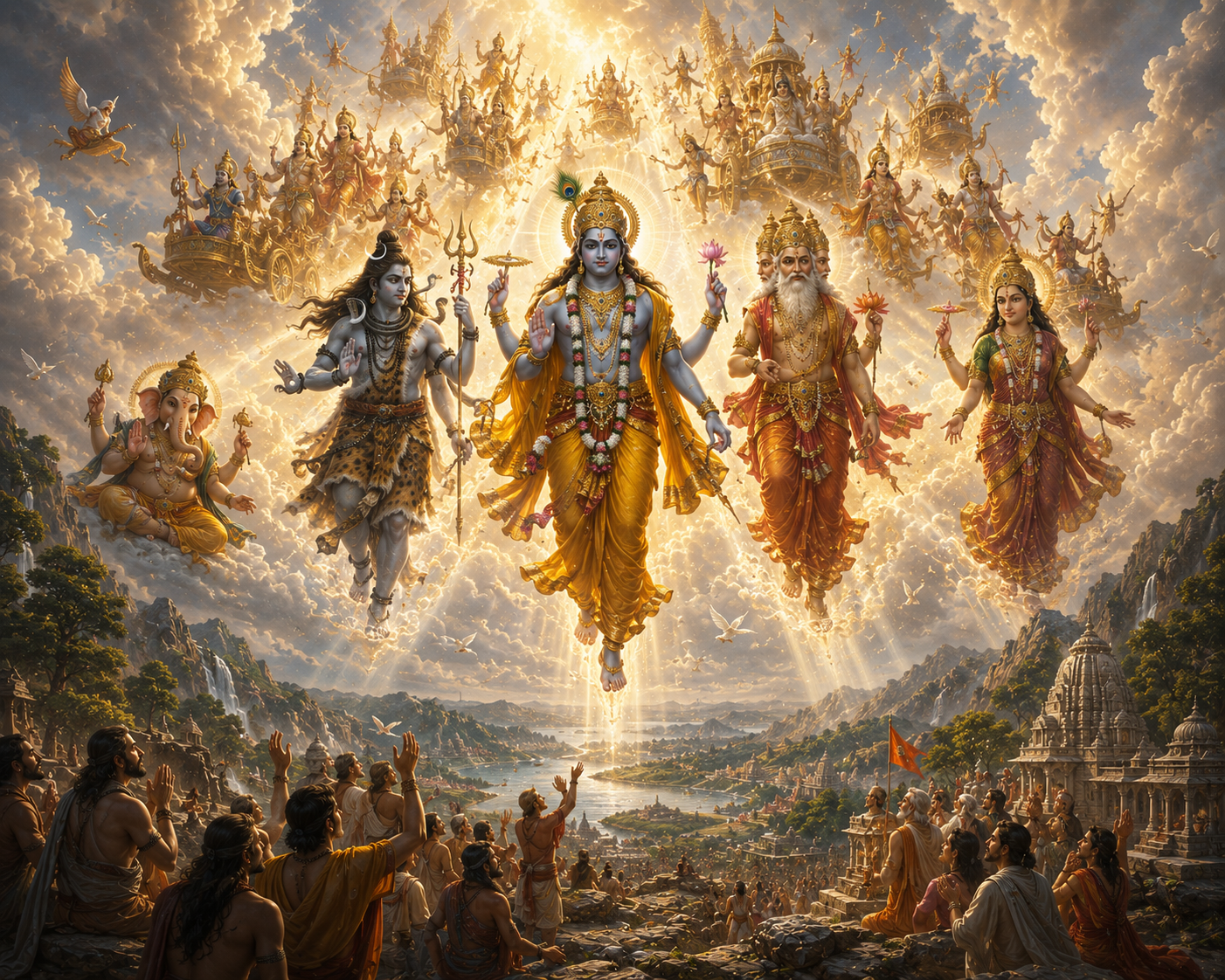
Eastern traditions approached these questions differently. In Hindu cosmology, existence is not limited to the visible world alone. Reality unfolds across many layers of consciousness and planes of existence, inhabited by beings beyond ordinary human perception. The universe itself is cyclical, vast, and alive with intelligence. Rather than viewing humanity as separate or central, these traditions often place human life within a much larger cosmic framework.
Whether interpreted literally, symbolically, or spiritually,
they point toward a profound possibility: Human consciousness may be part of something far greater than itself.
The Question That Still Remains
Perhaps the true power of the alien hypothesis is not whether ancient astronauts literally visited Earth. It is that the idea forces humanity to confront a deeper question:
What if our understanding of reality is incomplete?
For thousands of years, human beings have looked toward the stars and imagined intelligence beyond themselves. Maybe those stories were myths. Maybe they were symbols.
Or perhaps they reflected an intuition humanity has always carried:
That we are part of a universe far stranger, more conscious, and more interconnected than we yet understand.