The Alien Hypothesis Part 3: Consciousness, Civilization, and the Unknown
As humanity has advanced scientifically, our understanding of the universe has expanded dramatically. We now know that our galaxy alone contains hundreds of billions of stars,
many with planetary systems of their own.
What once seemed impossible—the existence of intelligent life elsewhere—no longer appears unreasonable. And yet, the deeper question may not simply be whether other intelligence exists. It may be whether humanity truly understands reality itself.
The Limits of Human Perception
Human beings experience reality through extremely narrow filters. Our senses perceive only a tiny fraction of the electromagnetic spectrum. Our minds organize experience into space,
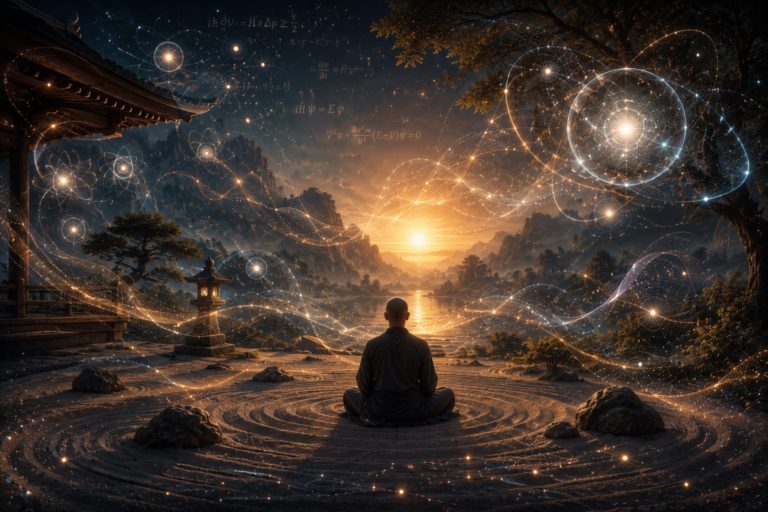
time, and separate objects. We assume what we perceive is reality itself. But modern science increasingly suggests otherwise. Quantum physics has revealed a universe that behaves in ways that challenge ordinary intuition. Particles appear as probabilities rather than fixed objects. Observation seems connected to physical outcomes. Even spacetime itself may not be fundamental. The universe is beginning to look less like a machine—and more like something profoundly interconnected and mysterious.
Modern Mystery
Recent years have added another unexpected layer to the discussion. Congressional hearings in the United States have included testimony from military personnel, intelligence officials, and fighter pilots describing encounters with unidentified aerial phenomena.
Highly trained observers, including Navy pilots such as David Fravor and Ryan Graves,
have publicly described objects exhibiting flight characteristics they could not explain using known technology. These testimonies do not confirm extraterrestrial life.
But they reveal something important:
Even modern institutions are increasingly acknowledging that some phenomena remain unexplained. For most of history, humanity assumed scientific progress would steadily eliminate mystery. Instead, the universe appears to be growing stranger.
Archeology and the Question of Origins
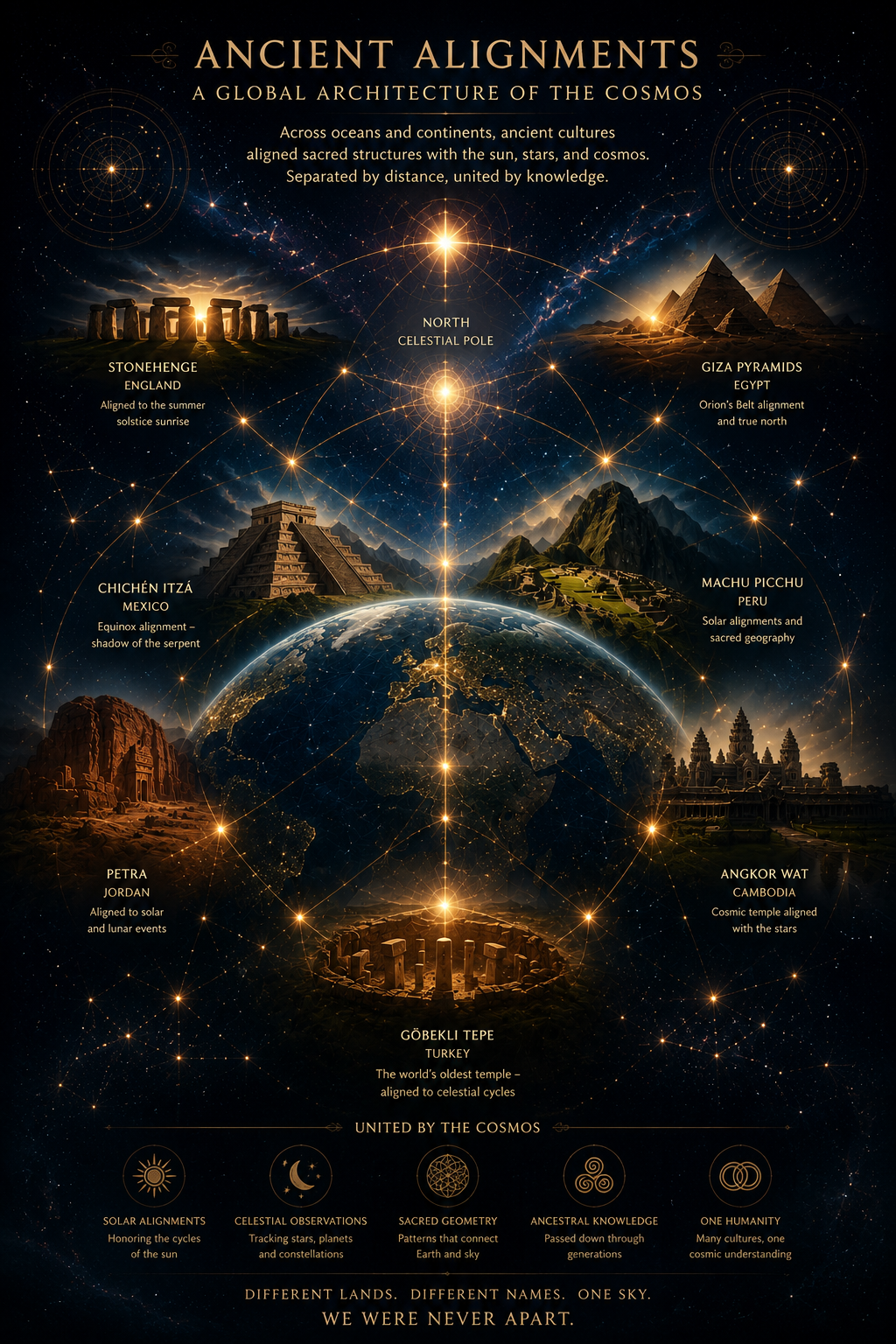
Archaeology has revealed extraordinary achievements from the ancient world that continue to provoke fascination and debate. Massive stone structures aligned with celestial events. Sophisticated mathematical knowledge appearing in civilizations separated by vast distances. Monuments whose scale and precision still inspire questions about how they were constructed using the tools officially available at the time. The pyramids of Egypt, the astronomical alignments of ancient India and Mesoamerica, and the enormous megalithic structures scattered across the world all point toward one undeniable fact: Ancient civilizations possessed a far deeper understanding of mathematics,
astronomy, and engineering than earlier generations once assumed.
Cosmic Engineering and the Search for Origins
Some researchers and theorists have suggested that these achievements may hint at forms of knowledge humanity no longer fully understands. Others speculate about the possibility of “cosmic engineering”—the idea that advanced intelligence could influence civilization over vast periods of time, guiding development indirectly rather than through direct control.
These ideas remain speculative. Yet they persist because they confront a genuine mystery:
How did complex knowledge emerge so rapidly in certain moments of human history?
Why did ancient cultures across the world repeatedly associate advanced wisdom with beings descending from the heavens?
Perhaps the deeper significance is not whether ancient civilizations were literally engineered by extraterrestrial beings. It may be that humanity has always sensed intelligence, order, and structure woven into the fabric of existence itself.
What Ancient Traditions Suggested
Long before modern science, Eastern traditions approached reality very differently.
In Hindu philosophy, the visible world is often described as Maya—not unreal, but shaped by perception and incomplete understanding.
Buddhism similarly questions whether the separate self we experience is ultimately real.
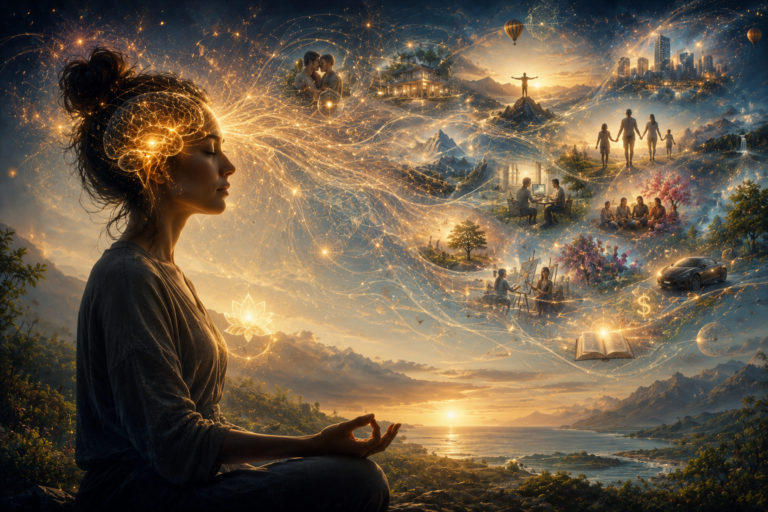
Both traditions suggest that ordinary perception reveals only part of reality. The goal was never simply to understand the external world. It was to understand consciousness itself.
The Alien Hypothesis as a Symbol
Perhaps this is why the alien hypothesis continues to fascinate humanity. Not because it conclusively proves extraterrestrial intervention—but because it symbolizes something deeply human. The intuition that reality extends beyond what we currently understand.
Ancient myths describing beings descending from the sky may reflect many things:
symbolic archetypes, psychological experiences, misinterpreted encounters, or perhaps something humanity still lacks the framework to fully comprehend. Whatever the explanation, the pattern repeats throughout history: Human beings consistently sense that there is more to existence than ordinary perception reveals.
A COSMIC PERSPECTIVE
Modern cosmology has profoundly altered humanity’s place in the universe. We are no longer the center of creation. The Earth itself is a tiny fragment within an unimaginably vast cosmos. Against this scale, human conflicts, empires, and ambitions begin to appear strangely temporary. And yet, within this immensity, consciousness emerged. The universe became aware of itself through living beings capable of reflection, wonder, and inquiry.
Perhaps that is the real mystery.
Final Reflection
The alien hypothesis may ultimately say less about extraterrestrials—and more about humanity itself. Our need to search beyond the known. Our intuition that reality is incomplete. Our sense that consciousness, existence, and the universe are connected in ways we do not yet fully understand. Whether the “gods” of ancient civilizations were literal beings, symbolic stories, or reflections of deeper truths, their presence across cultures points toward something enduring: Humanity has always felt that reality is larger, stranger,
and more mysterious than it first appears.
Maybe the greatest mystery is not whether we are alone in the universe—but whether we truly understand the nature of reality itself.