The Warrior Who Could Not Lift His Bow
A Reflection Inspired by the Bhagavad Gita.
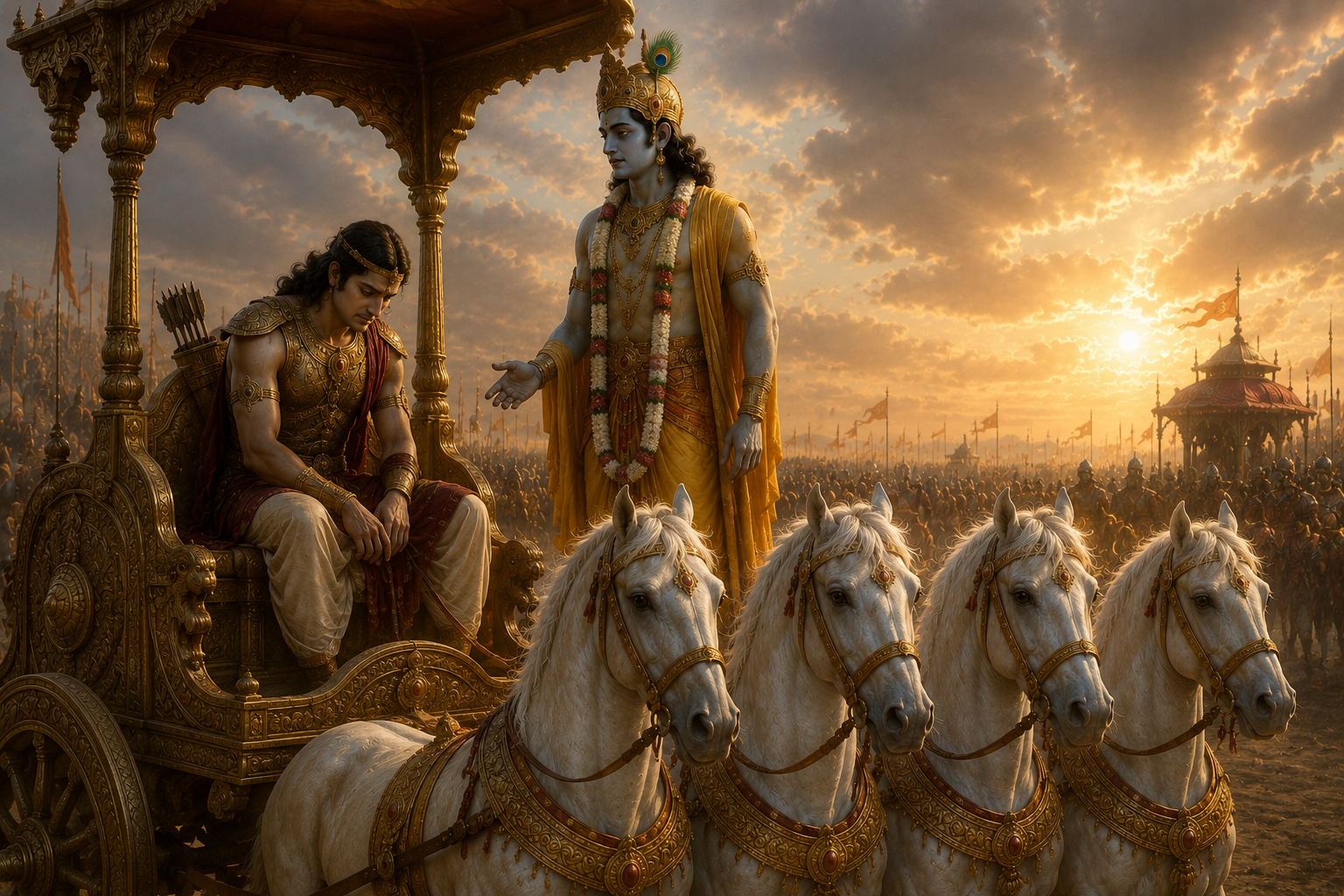
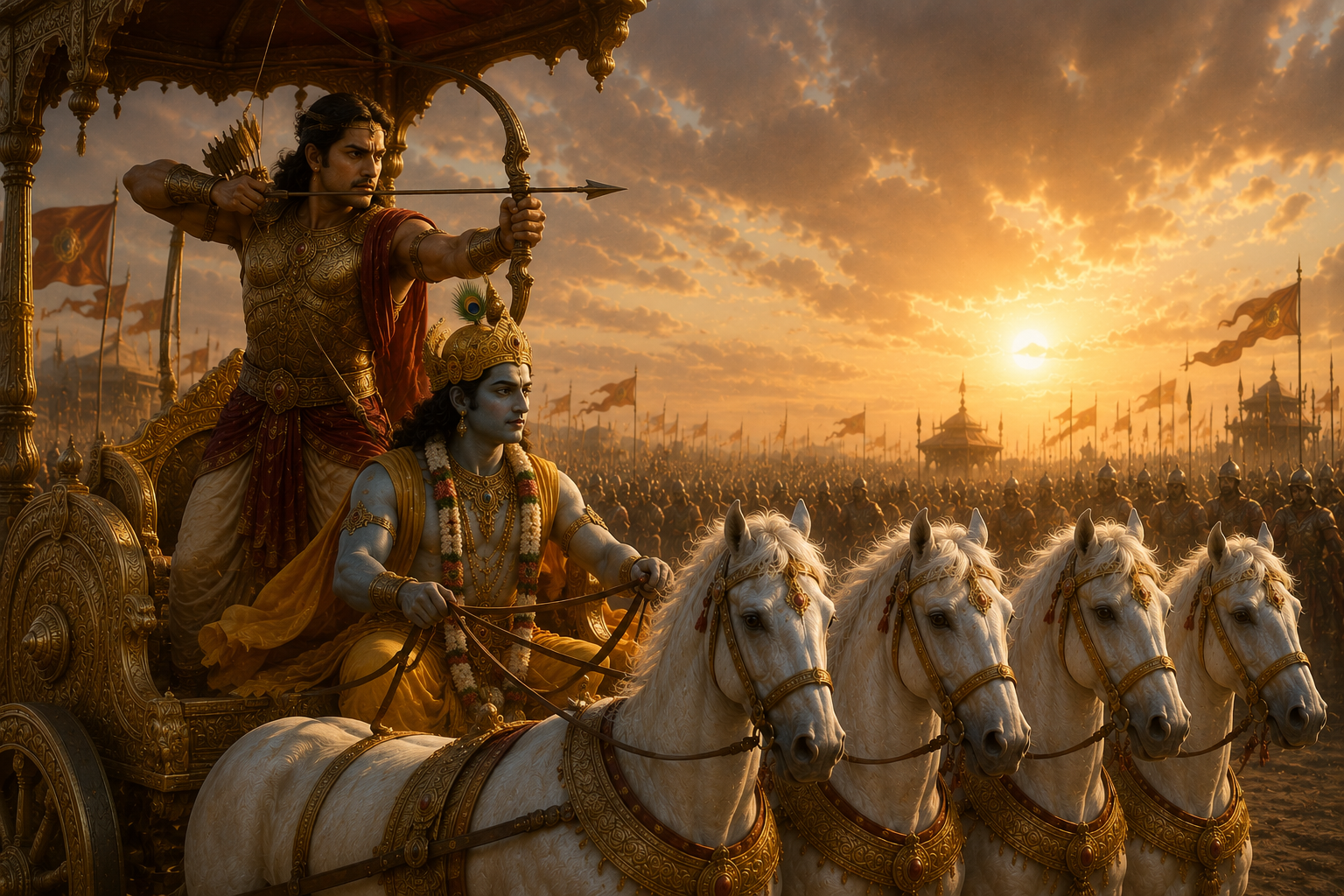
The battlefield stretched endlessly before Arjun. Thousands of warriors stood waiting beneath the rising sun. The sound of drums echoed across the plain. Flags moved in the wind. And in the middle of it all, Arjun lowered his bow.
His hands trembled. Not from fear of death—but from confusion. Across the battlefield stood teachers who had guided him, friends he had laughed with, his great grandfather and some of the family he had loved.
“How can this be right?” he asked. “How can truth demand destruction?”
Arjun’s breath grew heavy. The world no longer seemed clear. Everything he believed about honor, justice, and purpose—had collapsed into uncertainty.
Beside him stood Krishna, his charioteer. Calm. Silent. Watching.
“You see only the surface of this moment,” Krishna said softly.
“You believe you are the doer.
You believe life and death begin and end here. But what you truly are, was never born—
and can never die.”
Arjun looked up slowly. The noise of the battlefield still surrounded him, yet something within him had become still. For the first time, he began to see that his suffering did not come from action itself—but from attachment to identity, outcome, and fear.
“What should I do?” he asked quietly.
Krishna answered: “Act. But do not cling to the result. Do what must be done—without letting the mind bind itself to victory or defeat.”
Arjun closed his eyes. The battlefield had not changed. The uncertainty had not disappeared.
But something deeper had shifted. He no longer acted to preserve himself. He acted because clarity had replaced confusion. Slowly, Arjun lifted his bow once more.
Peace is not found by escaping life. It is found by seeing clearly within it.