Original Eastern Dialogue Parables – The Last Mango
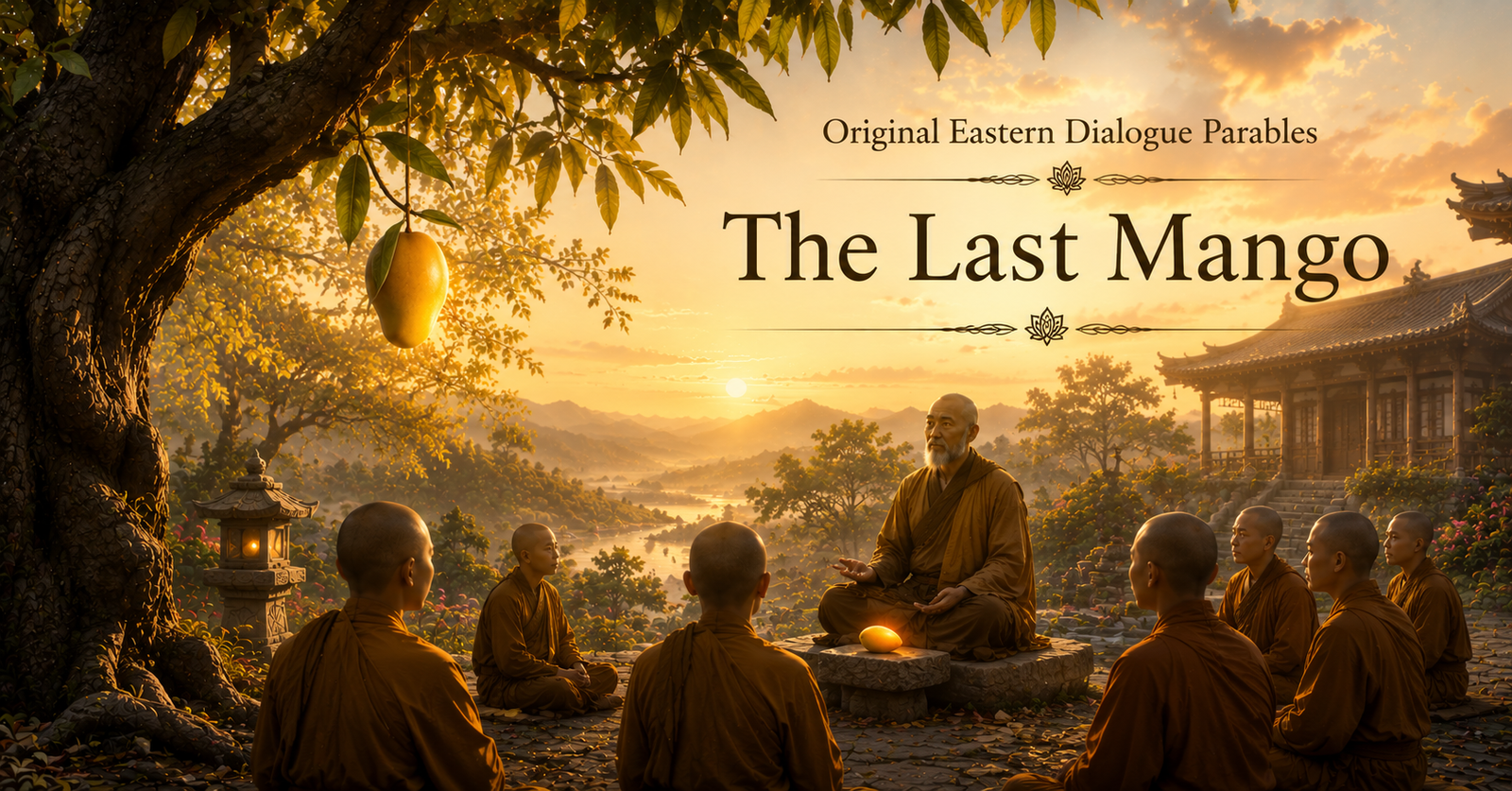
The monastery stood at the edge of a mango grove that had flourished for generations. Every summer the trees bent beneath the weight of sweet golden fruit. Travelers were welcomed. Children laughed beneath the branches. Birds feasted before sunrise.
The old abbot often said, “The trees have never asked who deserves their fruit.”
One year, however, the rains did not come. The streams grew shallow. Leaves curled beneath the relentless sun. By the end of summer, only a single mango remained. It hung from the oldest tree like a small sun. The monks quietly wondered who should receive it.
Some believed it belonged to the eldest monk. Others thought it should be given to a weary traveler. One suggested offering it to the village children. The youngest monk said nothing.
That evening the abbot gathered everyone beneath the tree. He plucked the mango carefully and held it in his hands. Its fragrance drifted through the warm evening air. “I have decided who shall receive this fruit.”
Every monk leaned forward. The abbot placed the mango on a smooth stone. “No one.” The monks looked at one another in confusion. Hours passed. The mango remained untouched. The next morning it was still there.
Its skin had begun to soften. By the third day tiny birds landed beside it. One pecked. Then another. Soon squirrels joined the feast. The monks watched silently as the fruit disappeared piece by piece. By sunset nothing remained except the seed.
The youngest monk finally asked, “Master… why did you let the animals eat it?”
The abbot knelt and picked up the seed. “When there were thousands of mangoes, no one argued.” “When there was only one, everyone believed they had found the perfect reason why it should belong somewhere.”
He turned the seed in his hand. “Scarcity did not create attachment.” “It revealed it.” The young monk lowered his eyes.
The abbot smiled gently.
“Tell me…”
“When the mango was eaten…”
“What exactly was taken from you?”
The monk searched for an answer. He had never possessed the fruit. He had never tasted it. Yet something inside him had felt deprived. For a long while, no one spoke. The wind stirred the branches overhead.
At last the abbot buried the seed beside the old tree. “What we cling to feeds only one.” “What we release may feed generations.”
The following spring, a tiny green shoot emerged from the earth. The monks smiled whenever they passed it.
No one wondered who it belonged to.
Reflection
When something becomes scarce, what does it reveal about your heart?