
Decay Is Inherent: A Buddhist Reflection on the Second Law of Thermodynamics
At some point, we begin to question the nature of change.
What we take to be stable—our bodies, our thoughts, the structures around us—does not remain so. Over time, everything shifts, dissolves, or gives way to something else.
This raises a deeper question:
Is decay a failure of the system, or is it the system itself?
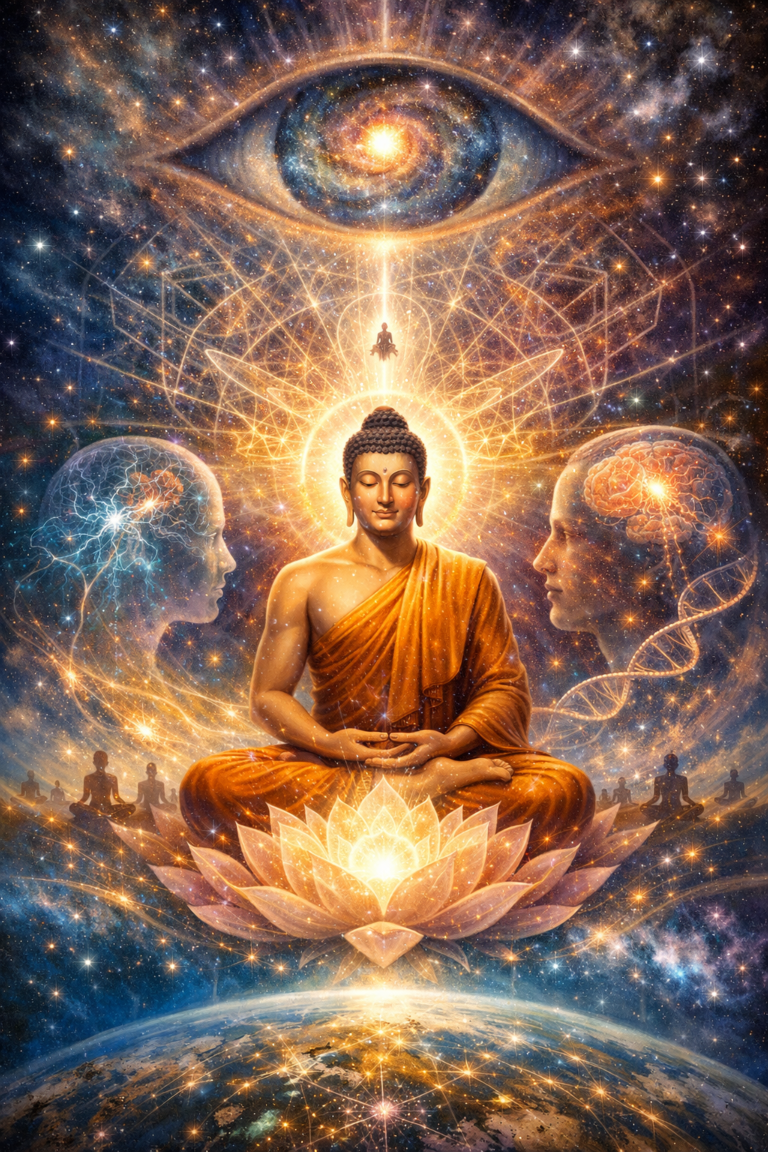
“Decay is inherent, strive unceasingly.” These final words attributed to the Buddha resonate with a striking familiarity to anyone acquainted with the Second Law of Thermodynamics—the principle that entropy, or disorder, inevitably increases over time in any closed system.
Though separated by millennia and arising from entirely different traditions, both perspectives converge on a shared insight: all conditioned things are subject to decline.
The Second Law tells us that energy disperses, structures break down, and order gives way to what we perceive as disorder. A cup of hot tea cools, a building crumbles, a star exhausts its fuel. This is not a failure of the system; it is the system functioning precisely as it must.
Entropy is not a flaw—it is a direction.
Buddhist thought, particularly in its emphasis on impermanence (anicca), arrives at a parallel understanding through introspection rather than measurement. Everything that arises passes away. Bodies age, emotions shift, identities dissolve.
The Buddha did not frame this as pessimism, but as clarity. Suffering, in this view, arises from resisting what is already true—clinging to what cannot remain.
Where thermodynamics describes the external world in terms of energy and probability, Buddhism maps the internal landscape of human experience.
Yet both point toward the same underlying pattern: stability is temporary, and transformation is constant. So, what does it mean to “strive unceasingly” in a universe defined by decay?
It is not a call to resist entropy—that would be futile. Even the most advanced systems cannot escape the laws that govern them. Instead, the striving the Buddha speaks of is inward rather than material. It is the effort to cultivate awareness, clarity, and compassion despite the inevitability of loss.
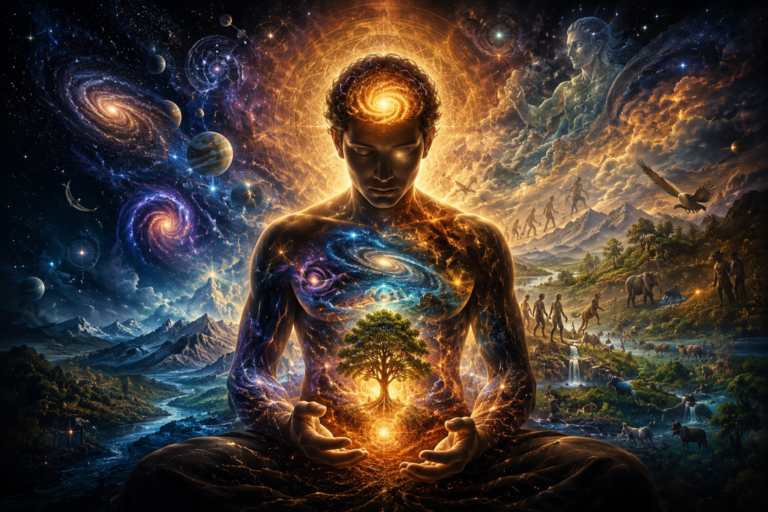
In a sense, life itself can be seen as a temporary ordering within a broader movement toward disorder. Living systems maintain structure by constantly expending energy—repairing, adapting, renewing.
But this, too, is not permanent. Eventually, the system yields.
Buddhist thought acknowledges this without despair. The point is not to construct something that lasts indefinitely, but to engage fully and skillfully within what is transient.
Seen this way, the Second Law does not contradict spiritual insight—it reinforces its urgency. If everything is in flux, then there is no stable ground to postpone understanding.
If all structures decay, then meaning cannot be anchored in permanence, but must be found in how we meet the present moment.
“Decay is inherent” is the observation.
“Strive unceasingly” is the response.
Together, they form a quiet directive: to understand the nature of reality, and to live in alignment with it.
As the physicist Arthur Eddington once observed, “The law that entropy always increases holds, I think, the supreme position among the laws of Nature.”