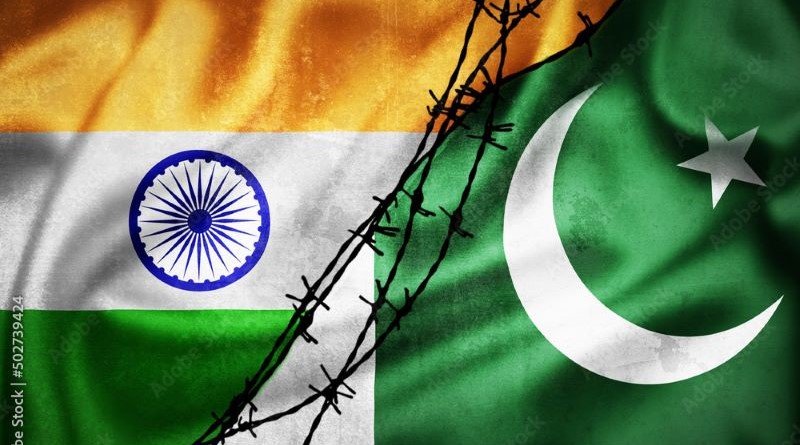
Why India and Pakistan Took Different Economic Paths After Independence
As India moves closer to becoming one of the world’s top three economies, its neighbor Pakistan continues to grapple with recurring debt crises and economic instability. This contrast often raises a fundamental question: both nations gained independence at the same time, share deep cultural and historical roots, and have comparable human potential—so why have their trajectories diverged so significantly?
The answer lies, in part, in the foundational choices made in the early years of nation-building and how consistently those principles were followed over time.
India’s progress today reflects decades of institutional continuity and gradual policy evolution. While the country has faced its share of challenges—economic slowdowns, political upheavals, and social complexities—its leadership and institutions have generally managed to course-correct and sustain long-term development goals.
Pakistan, by contrast, showed strong early promise, particularly from the mid-1950s to the mid-1960s, when its economic growth at times outpaced India’s. However, subsequent geopolitical conflicts, internal political instability, and shifting national priorities appear to have disrupted that momentum. Over time, structural issues such as underinvestment in education, inconsistent economic reforms, and governance challenges have compounded its difficulties.
India’s early emphasis under its first Prime Minister, Jawaharlal Nehru, on building institutions of higher learning, promoting scientific temper, and fostering democratic governance laid a long-term foundation for modernization. Such transformation is inherently gradual—it requires decades of sustained investment in education, inclusive policies, gender equality, and economic reform to yield visible results.
For any nation emerging from colonial rule, the path to stability and prosperity is complex and non-linear. India’s experience suggests that steady institutional development and long-term policy consistency can make a critical difference. At the same time, Pakistan’s journey underscores how internal and external pressures can shape, and sometimes hinder, national progress.
Ultimately, the divergence between the two countries is not just a story of different starting points, but of how priorities were set, institutions were nurtured, and policies were sustained—or disrupted—over time.
“Political democracy cannot last unless there lies at the base of it social democracy.” B.R. Ambedkar