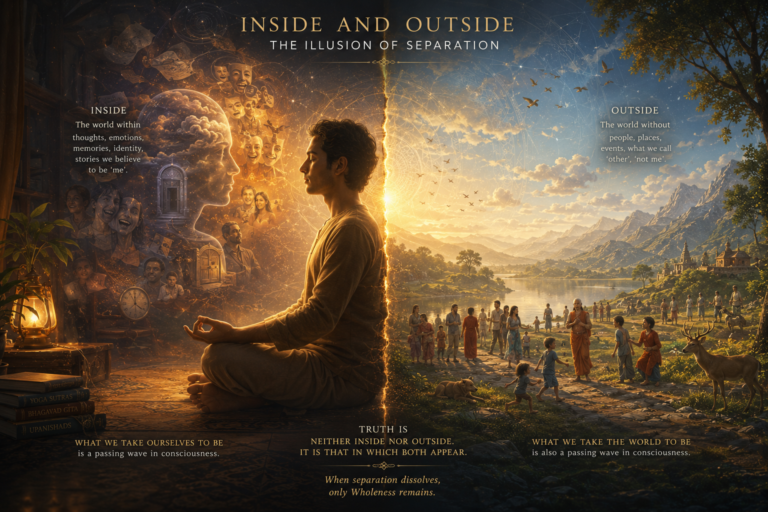
We assume reality is something “out there.” Something fixed. Independent. Objective. But everything you have ever known—has appeared within experience. Across traditions, this assumption begins to shift.
In Hindu philosophy, reality is often described as Maya—not illusion in the sense of non-existence, but appearance shaped by perception.
In modern physics, the deeper we look, the less solid reality becomes. Particles behave like probabilities. Observation seems to matter. Even space and time may not be fundamental.
Different paths. Different languages. But a similar question begins to emerge:
Is reality something we discover— or something we construct? Not to define reality—but to question how it is known.
Start With These
-
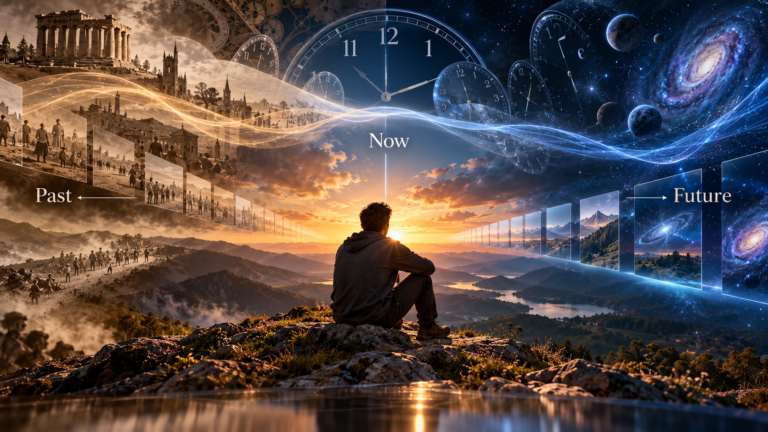
Does the Present Moment Exist?
Past, future, and the strange place we call now What time is it? You might look at a clock and answer. But that wasn’t really the question.When is it? The obvious answer is: Now. So try to find it. Before you finished reading the word now, the moment in which you began reading it had…
-
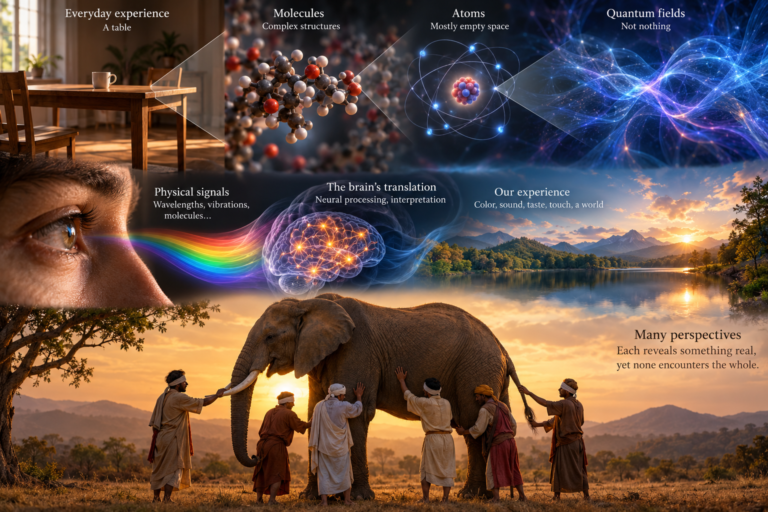
The Emptiness Beneath Everything
What physics, perception, and Eastern philosophy suggest about the things we call real Look around you. – a table a wall or a tree outside the window. Your hands resting in front of you. The world appears to be filled with things. Solid & separate things – things that seem unquestionably real. The table is…
-
The Alien Hypothesis Part 3: Consciousness, Civilization, and the Unknown
As humanity has advanced scientifically, our understanding of the universe has expanded dramatically. We now know that our galaxy alone contains hundreds of billions of stars,many with planetary systems of their own.What once seemed impossible—the existence of intelligent life elsewhere—no longer appears unreasonable. And yet, the deeper question may not simply be whether other intelligence…
-
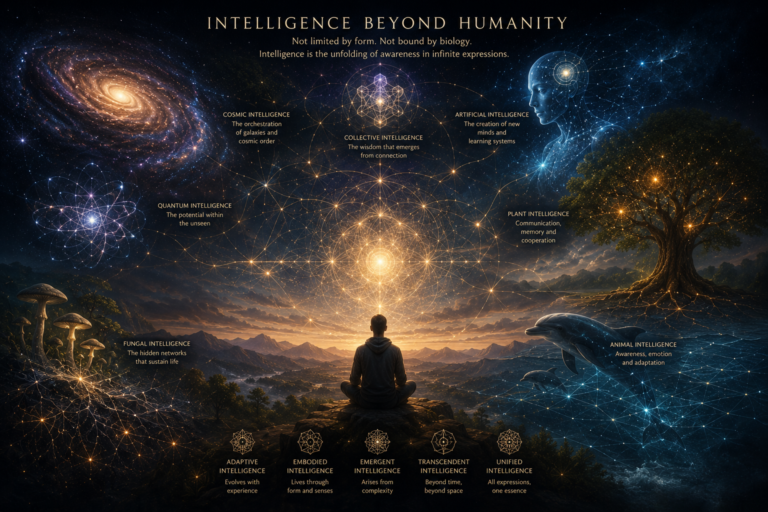
The Alien Hypothesis Part 2: Intelligence Beyond Humanity
If ancient myths and scriptures hint at non-human intelligences interacting with humanity,the next question becomes even more fascinating: What were these beings truly meant to represent? Modern interpretations often imagine extraterrestrials arriving in physical craft from distant stars. But ancient civilizations rarely separated the physical from the spiritual so clearly.To them, the cosmos was alive—filled…
-
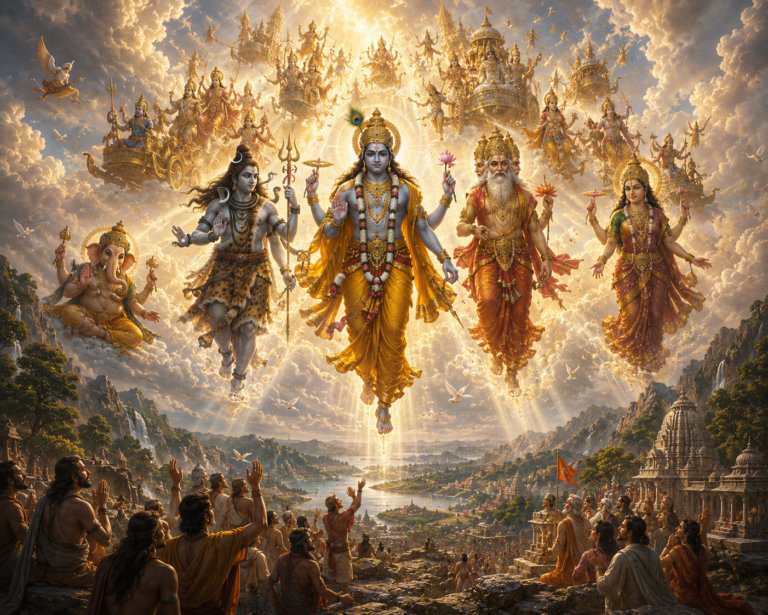
The Alien Hypothesis Part 1: Were Humanity’s “Gods” More Than Myth?
Across the ancient world, civilizations separated by oceans and thousands of years shared a remarkably similar idea: The gods came from the sky. From the Sumerians of Mesopotamia to the pyramids of Egypt,from the Vedic traditions of India to the myths of Mesoamerica, humanity repeatedly described powerful beings descending from the heavens—bringing knowledge, order, technology,…
-
Inside and Outside: The Illusion of Separation
Perception • Consciousness • Reality From the moment we are born, we experience life through a quiet assumption:“I am in here.The world is out there.” It feels obvious. There is a self behind the eyes, looking outward at people, objects, and events unfolding in space. The observer appears separate from what is observed. But what…