Faith, Family, and the Universe: Questioning God Beyond Religion
I had a fairly normal childhood. As the first grandson expected to carry forward the family name, I received a great deal of attention from my paternal grandparents. I spent much of my time with them, and they tried to instill in me what they believed were the right values, principles, and religious ideas.
Interestingly, my grandparents had very different perspectives on religion and God, even though they both belonged to the same tradition. Despite some clear contradictions, their views were largely complementary in the bigger picture—different, yet somehow the same.
It reminds me of a question: since we were born, nearly every cell in our bodies has been replaced many times. So are we the same person we were ten or twenty years ago, or are we different? Perhaps we are neither entirely the same nor entirely different. It’s a bit of a paradox—one that can quickly become overwhelming if you think about it too much.
In our household, the women tended to be deeply religious, aligning more with the Sanatan Dharma—the “eternal way”—within Hinduism. The men, on the other hand, leaned toward Arya Samaj, a reform movement within Hinduism. Arya Samaj emphasizes the authority of the Vedas and the doctrine of karma, while rejecting practices such as idol worship, polytheism, animal sacrifice, ritualism, and the idea of divine incarnations (avatars). It also strongly opposes social practices like caste discrimination, untouchability, and child marriage, viewing them as inconsistent with Vedic teachings.
Some of these beliefs—especially around idol worship, avatars, and polytheism—stood in direct contrast to the practices of Sanatan Dharma. Yet, this philosophical divide never created conflict within our family. Each person practiced their faith in their own way.
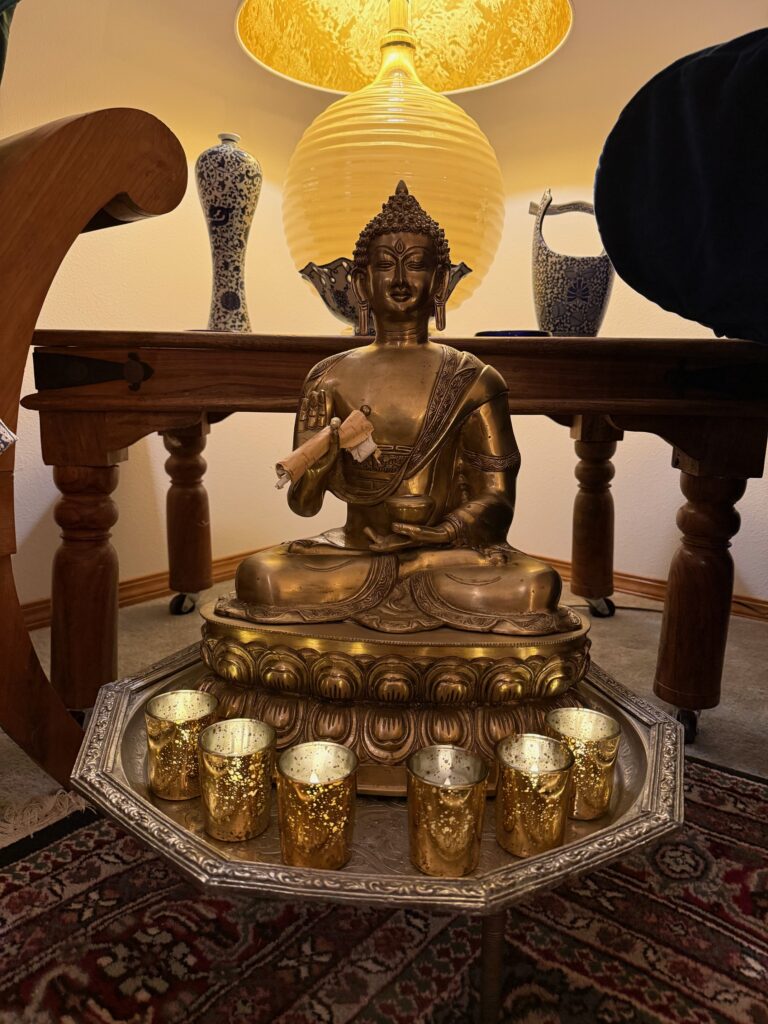
My grandmother had a small temple in the house, complete with marble statues of various deities. She prayed there daily. My grandfather, while ensuring the space was always clean and well-maintained, never participated in those rituals. Instead, he regularly attended Arya Samaj gatherings, where prayers and discussions followed Vedic traditions. At the same time, he accompanied my grandmother on pilgrimages, supporting her in practicing her faith as she believed was right.
Growing up in this environment, I was exposed to a wide spectrum of ideas about Hinduism. Our family often engaged in thoughtful debates, with everyone sharing their perspectives on God, nature, and existence. These discussions sparked in me a lasting fascination with the idea of God—the creator, the force behind the universe, the omnipresent reality. Every religion, after all, offers its own definition of God, often presenting itself as the ultimate truth and its followers as uniquely chosen.
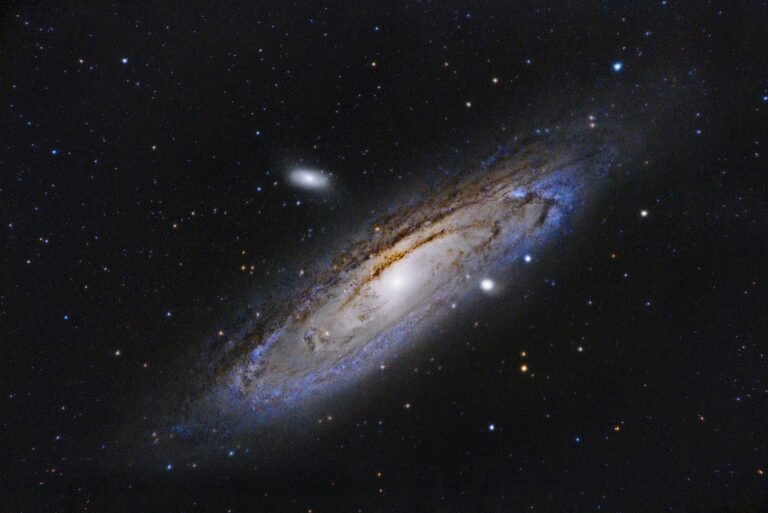
Then one night, while observing the sky through my 10-inch Dobsonian telescope, something shifted. As I looked into the vastness of the universe, I began to feel that the descriptions of God found in scriptures didn’t quite align with what I was seeing. The universe appeared far more expansive, mysterious, and different from the versions often presented in places of worship.
It led me to a quiet realization: the source behind the observable universe might not be the same as the God described in religious texts. There seemed to be a gap between direct experience and inherited belief—between the universe as it reveals itself and the version of God as it is commonly taught.
As George Bernard Shaw aptly said: “Forgive him, for he believes that the customs of his tribe are the laws of nature!”